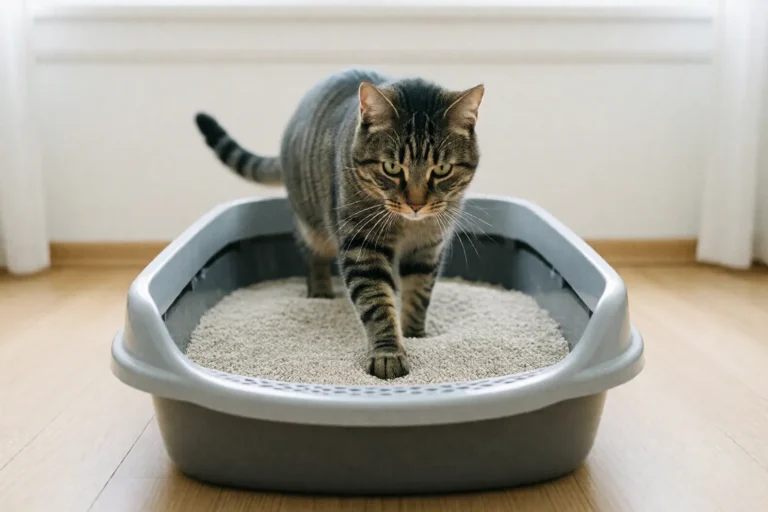
How to Clean a Litter Box (and Stop It From Smelling)
As an Amazon Associate I earn from qualifying purchases. Learn more
Let's be honest: nobody gets a cat because they're excited about cleaning a litter box. But a clean box is one of the biggest things you can do for your cat's happiness, and for how your home smells.
Here's the routine I follow, broken down into what to do daily, weekly and every so often.
What you'll need
- A litter scoop (a sturdy metal one lasts longer than plastic)
- Small bags or a dedicated litter bin
- Gloves
- Mild, unscented dish soap
- A brush or sponge used only for the litter box
- Fresh litter
Every day: scoop
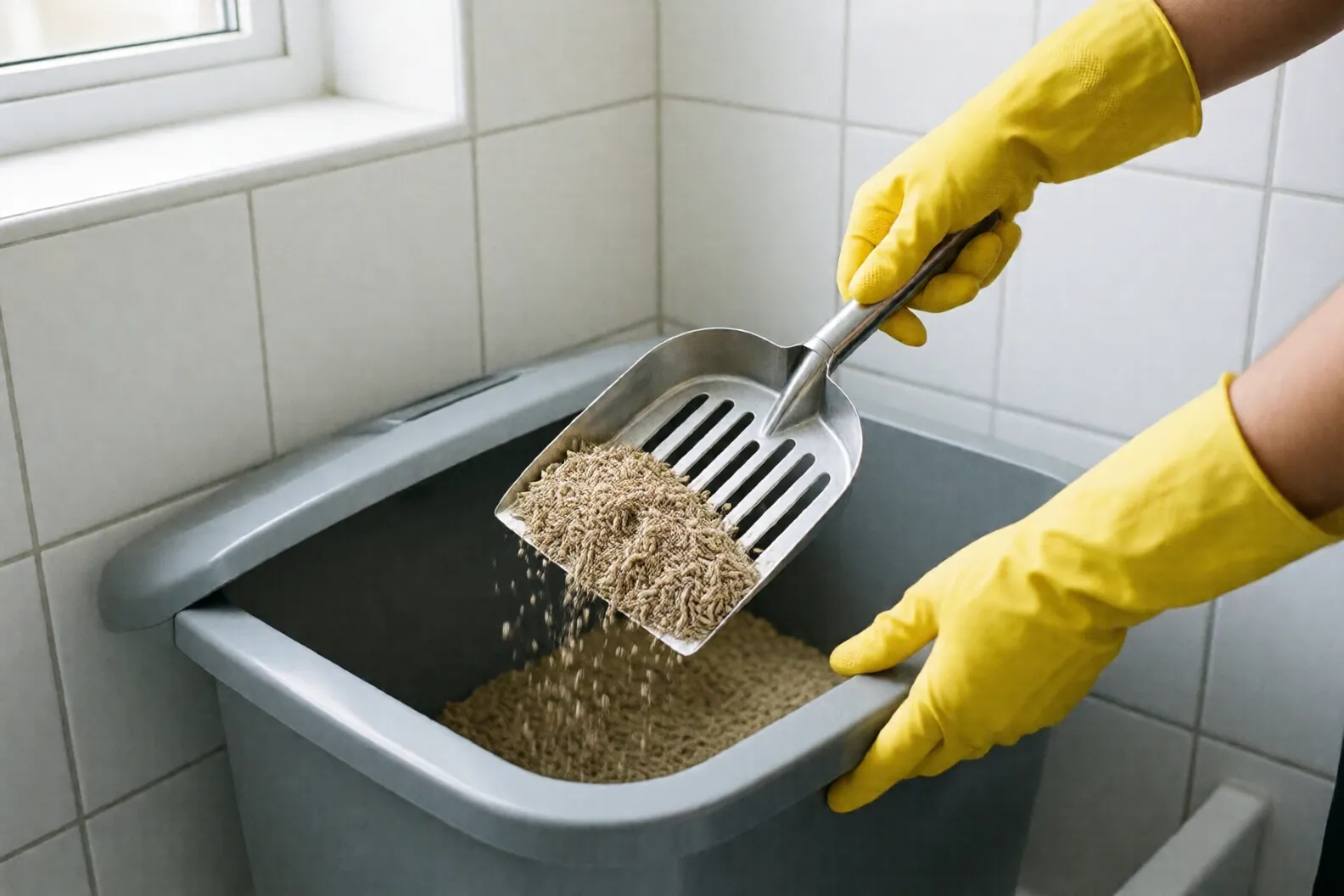
Scoop at least once a day. Twice is even better if you can manage it. Remove all clumps and poop, then top up the litter if the level has dropped.
Why so often? Cats have a much stronger sense of smell than we do. A box that seems "fine" to you may already be unpleasant for your cat, and a cat who doesn't like their box will find somewhere else to go.
Tip: keep the scoop and bags right next to the box. If cleaning takes 30 seconds and everything's within reach, it's much easier to stay consistent.
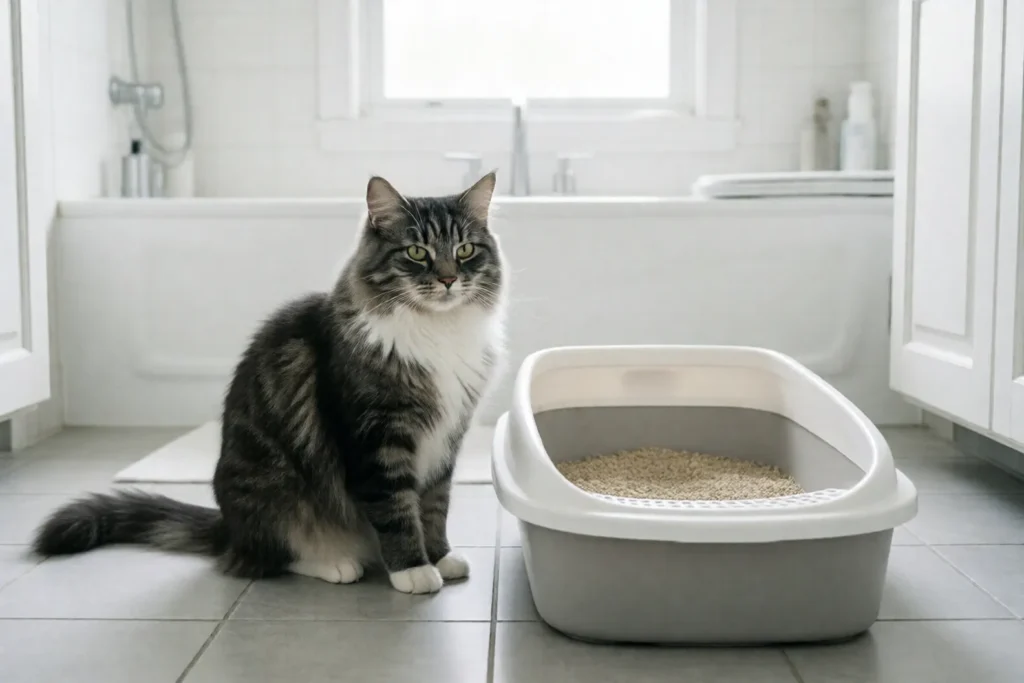
Every 1–3 weeks: full litter change
Scooping doesn't remove everything. Small bits of urine and bacteria build up over time, and that's where lingering smells come from.
How often you need a full change depends on your litter:
- Clumping litter: usually every 2–3 weeks if you scoop daily. Change it sooner if it starts to smell even after scooping.
- Non-clumping litter: usually once a week, because urine soaks into the litter instead of forming clumps you can remove.
To do a full change:
- Empty all the old litter into a bag.
- Wash the box (see below).
- Dry it completely.
- Refill with fresh litter.
How to wash a litter box
Use warm water and mild, unscented dish soap. Scrub all the corners and the rim, rinse thoroughly, and let it dry fully before adding new litter. Damp litter clumps to the bottom and makes the next clean harder.
What to avoid
- Strong-smelling cleaners. Cats can be put off by scented products, and a box that smells of lemon or pine to you can smell overwhelming to them.
- Ammonia-based cleaners. Urine contains ammonia, so these can make the box smell like a toilet to your cat in the wrong way, and can encourage marking.
- Harsh chemicals without thorough rinsing. If you use a disinfectant, check that it's safe for pets and rinse very well. Some common household products (including some containing phenols) are toxic to cats.
Every year or so: replace the box
Plastic litter boxes get scratched over time. Those tiny scratches trap bacteria and smells that washing won't fully remove. If your box still smells after a proper clean, it's probably time for a new one.
How to keep litter box smell under control
- Scoop daily. This does more than any spray or deodorizer.
- Keep litter at the right depth. Around 5 cm (2 inches) works for most cats. Too little and urine reaches the bottom of the box.
- Have enough boxes. Fewer boxes means each one gets used more. (More on that in how many litter boxes you need.)
- Ventilate the area. A box in a stuffy cupboard will always smell worse.
- Skip heavily scented litter and air fresheners near the box. They mostly cover smells for you while bothering your cat.
A note on health and hygiene
- Wear gloves and wash your hands after cleaning.
- If you're pregnant, ask someone else to clean the box if possible. Cat feces can carry toxoplasmosis, which can be dangerous during pregnancy. If you have to do it yourself, wear gloves and wash your hands well afterwards.
- Pay attention to what you're scooping. Changes in size, number or color of clumps, diarrhea, or blood can be early signs of a health problem. If something looks off, call your vet.
Quick routine summary
- Daily: scoop, top up litter
- Every 1–3 weeks: empty, wash with mild soap, dry, refill
- Yearly: replace scratched or smelly boxes
Final thoughts
Cleaning the litter box will never be the highlight of your day, but a simple routine makes it quick and keeps your cat happy to use it. Most litter box smell problems come down to not scooping often enough, so if you change just one thing, make it daily scooping.
If you're tired of scooping altogether, have a look at whether an automatic litter box is worth it.