Why Cats Need Vertical Space (and Easy Ways to Add It)
As an Amazon Associate I earn from qualifying purchases. Learn more
Ever notice how your cat always ends up on the highest spot in the room? The top of the wardrobe, the fridge, the bookshelf you thought was off-limits. That's not random. Climbing and perching are deeply built into how cats feel safe and comfortable.
If you live with an indoor cat, giving them proper vertical space is one of the easiest ways to make your home feel bigger and calmer for them.
Why cats love being up high
They feel safer
In the wild, cats are both hunters and prey. Being up high lets them watch everything around them without being easy to reach. A cat on a high perch can relax because nothing can sneak up on them.
It keeps the peace in multi-cat homes
In homes with more than one cat, height works a bit like social status. Cats can share a room more easily when they can spread out on different levels instead of competing for the same floor space. More levels often means fewer standoffs.
It's exercise
Jumping and climbing are great exercise, especially for indoor cats who don't have trees to climb. Molly treats anything tall as a personal challenge, and honestly, it's a big part of how she burns off her endless energy.
It's entertainment
A high spot near a window is basically cat TV. Birds, people, cars, leaves blowing past: it keeps their minds busy for hours.
Signs your cat wants more vertical space
- Constantly jumping onto counters, tables or shelves
- Climbing curtains or furniture
- Tension between cats over certain spots
- Restlessness or boredom, especially in indoor-only cats
- Always sleeping on top of the highest thing they can reach
Easy ways to add vertical space
You don't need to turn your home into a jungle gym. A few well-placed options can make a big difference.
Cat trees
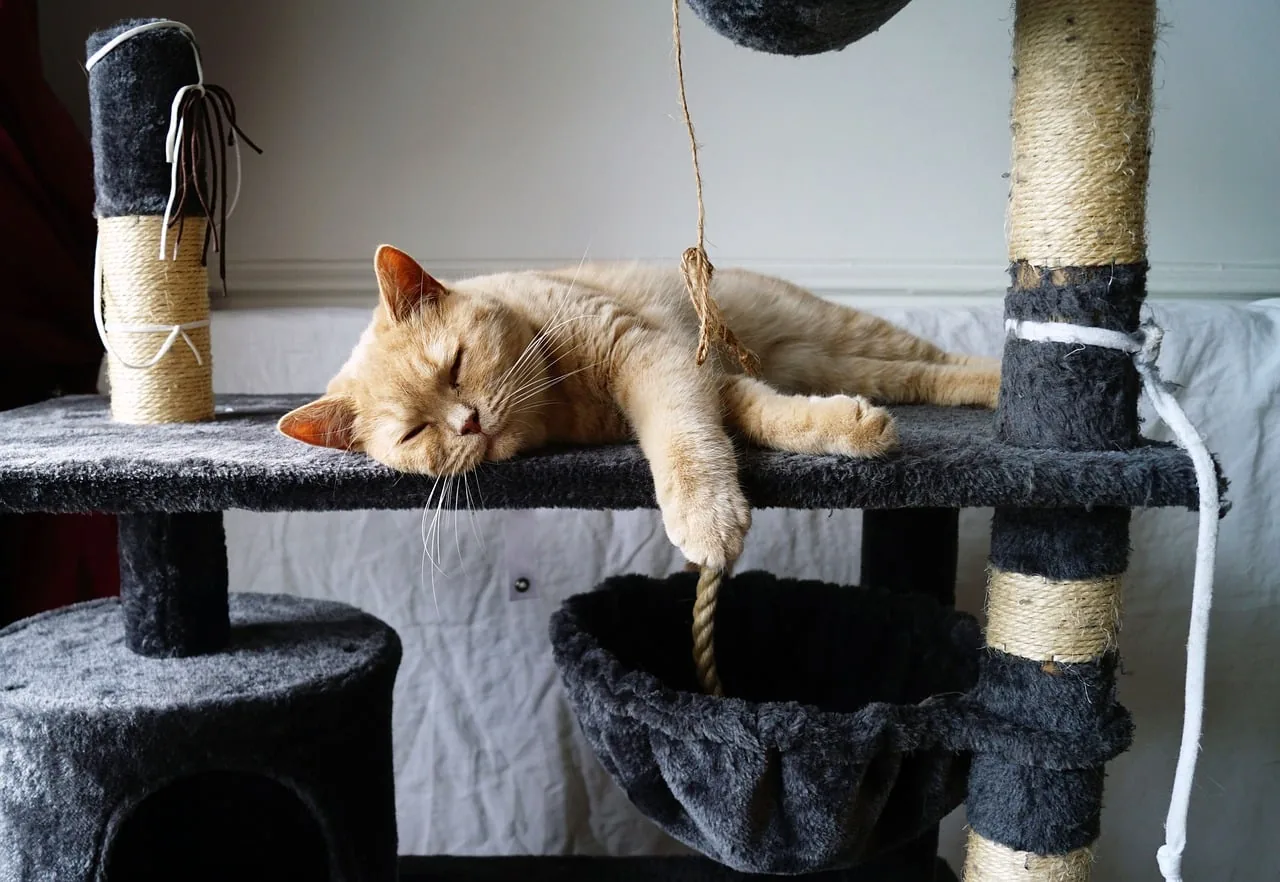
The classic choice. A good cat tree gives your cat several levels to climb, a perch at the top, and often scratching posts and hiding spots too. Look for one that's sturdy and doesn't wobble. If it moves when your cat jumps on it, many cats won't trust it.
Wall shelves
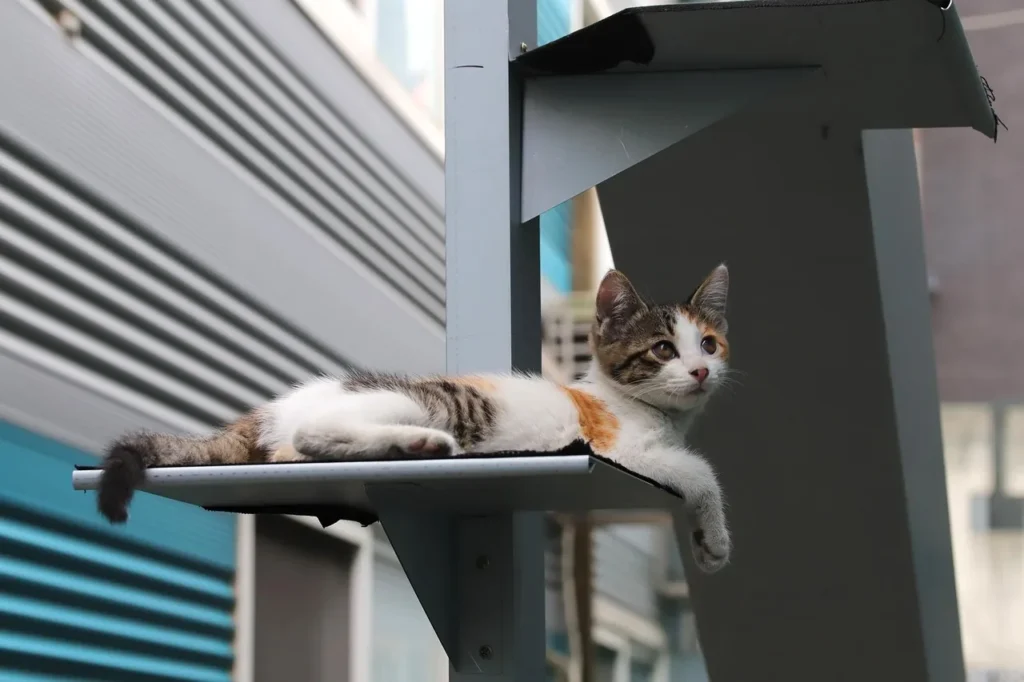
Cat shelves mounted on the wall create climbing routes without taking up floor space, which is great for small apartments. Make sure they're securely fixed into the wall and have a non-slip surface.
Window perches
A perch attached to a window ledge or window gives your cat a front-row seat to the outside world. Many cats will choose this over any other spot in the house.
Use what you already have
- Clear the top of a sturdy bookshelf and add a blanket.
- Place a chair or small table so your cat can reach a windowsill.
- Leave a gap on top of a wardrobe and make a "step" route to it.
Tips for setting it up
- Place it where your family spends time. Cats like being near their people, just from above. A cat tree hidden in a spare room often goes unused.
- Near a window is a bonus. Height plus a view is the dream combination.
- Create routes, not just single spots. Cats like being able to move around a room without touching the floor.
- Think about older cats. Senior cats or cats with arthritis may need lower levels, ramps or steps rather than big jumps.
- Make it stable. Anchor tall cat trees to the wall if needed, especially in homes with energetic cats.
Will it stop my cat from jumping on counters?
It often helps. A lot of counter-surfing happens because the counter is the highest, most interesting spot available. Give your cat a better high spot nearby, like a cat tree near the kitchen, and make the counter less rewarding (no food left out), and many cats switch over.
Final thoughts
Vertical space isn't a luxury for cats. It's a big part of how they feel safe, stay active and get along with each other. Even one good cat tree or a couple of shelves can make an indoor cat noticeably happier.
Next, if your cat is also scratching your sofa to pieces, have a look at my guide on how to stop your cat from scratching furniture.
Ready to add some height? See our cat tree and furniture picks.