How to Stop Your Cat From Scratching Furniture
As an Amazon Associate I earn from qualifying purchases. Learn more
If your sofa arm looks like it's been through a shredder, you're definitely not the first cat owner to deal with this. The first thing to know: you can't stop a cat from scratching, and you shouldn't try. What you can do is teach them to scratch somewhere else.
Why cats scratch
Scratching isn't bad behavior. It's a normal, healthy part of being a cat:
- Nail care. Scratching removes the old outer layers of the claws.
- Stretching. A good scratch stretches the whole body, from the toes to the back.
- Marking territory. Cats have scent glands in their paws. Scratching leaves both a visual mark and a scent mark that says "this is mine."
- Stress relief. Many cats scratch when they're excited, frustrated, or just woke up.
So the goal isn't to stop scratching. It's to make the right spot more appealing than your furniture.
Step 1: Get the right scratching post
Many cats ignore scratching posts simply because the post is wrong. A good one should be:
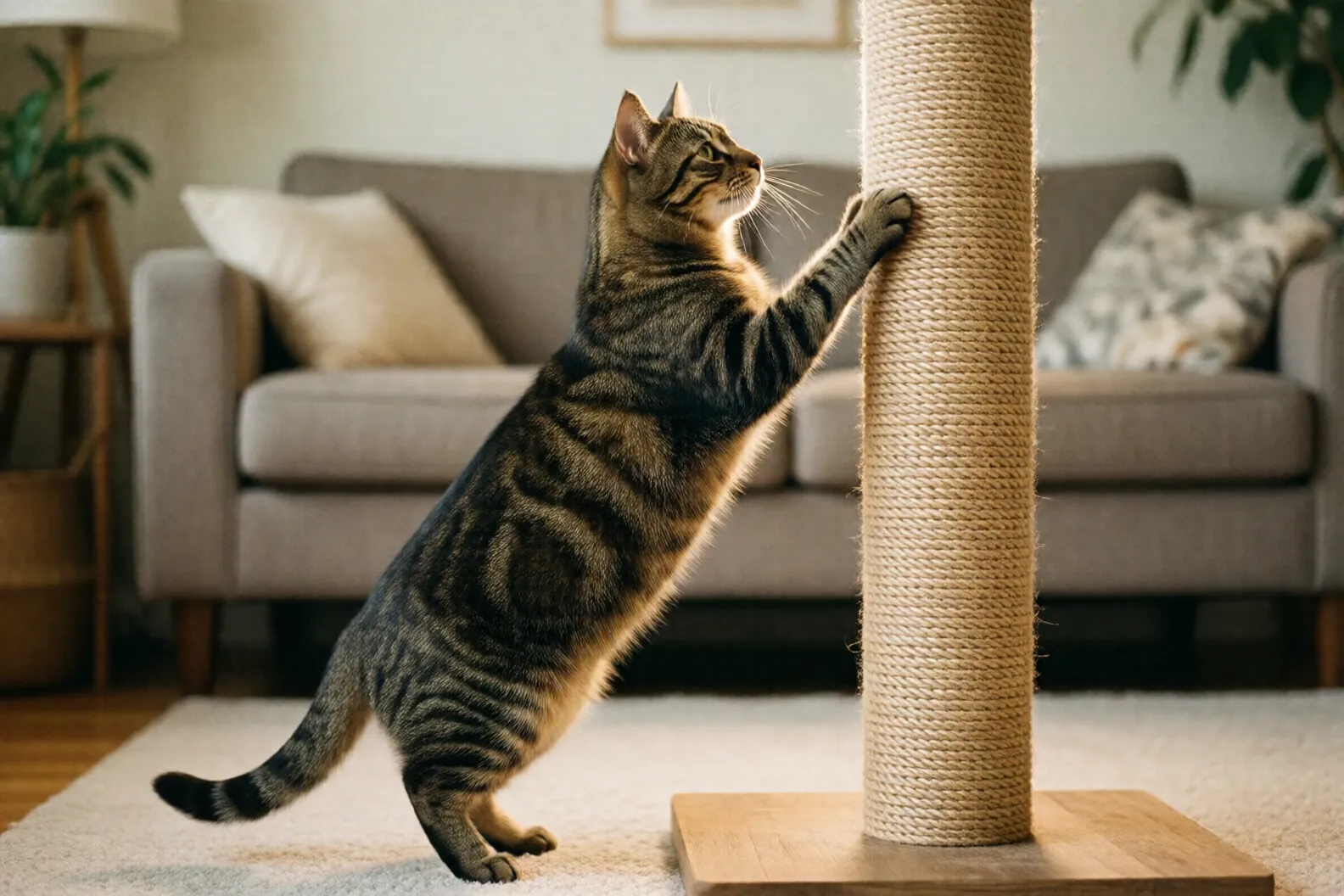
- Tall enough for your cat to stretch out fully, standing on their back legs.
- Sturdy. If it wobbles or tips, your cat won't use it. This is the most common mistake.
- Covered in the right material. Sisal rope or sisal fabric is a favorite for many cats. Carpet-covered posts can confuse some cats about whether carpet is okay to scratch.
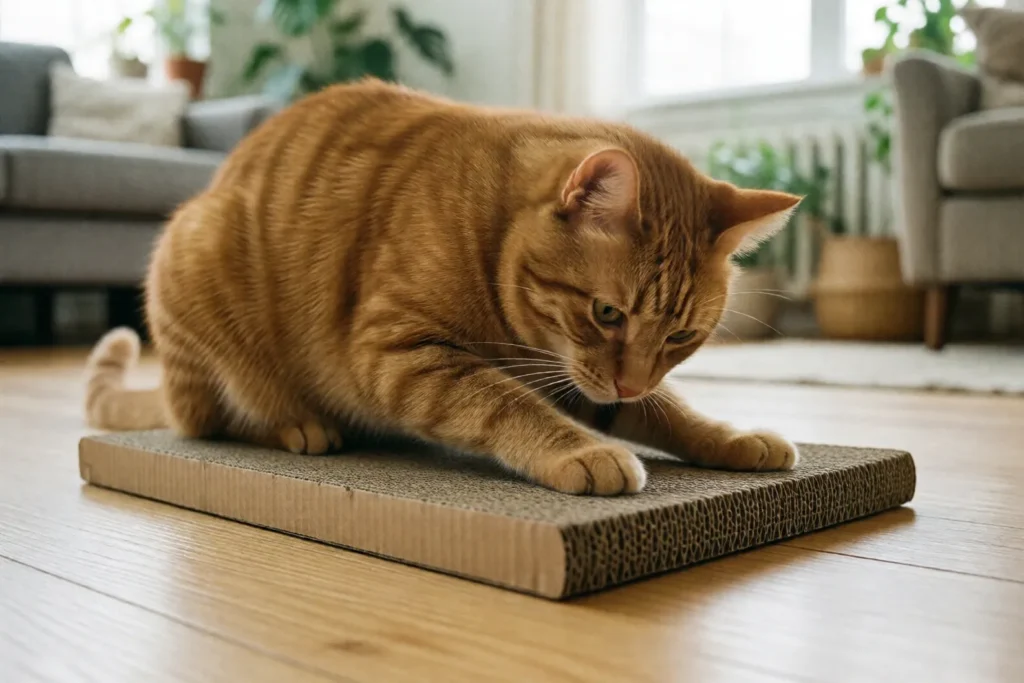
Also pay attention to how your cat scratches. Some cats scratch vertically (sofa arms, door frames), others horizontally (rugs, stairs). Choose a post or a flat scratcher that matches their style. Many cats like both.
Step 2: Put it in the right place
Location matters more than most people think.
- Right next to the furniture they're scratching. If your cat attacks the sofa arm, the post goes right next to the sofa arm.
- Near where they sleep. Cats often scratch right after waking up.
- In shared, visible areas. Remember the territory marking? Cats want to scratch where it "counts," not hidden away in a back room.
Once your cat reliably uses the post, you can move it a little at a time to a spot you prefer.
Step 3: Make the post attractive
- Rub some catnip or silvervine on it (not every cat reacts, but many do).
- Drag a wand toy across and up the post so your cat's claws catch on it during play.
- Reward your cat with praise or a treat when they use it.
Step 4: Make the furniture less appealing
While your cat is learning, make their favorite scratching spot less fun:
- Double-sided tape on the scratched area. Most cats hate sticky paws.
- A throw or blanket over the damaged spot.
- Remove the scent mark. Clean the area with an enzyme cleaner so it doesn't smell like "their spot" anymore.
Once your cat has fully switched to the post, you can usually remove these.
What not to do
- Don't punish or shout. It doesn't teach your cat where to scratch. It just teaches them to scratch when you're not around, and can make them stressed or scared of you.
- Don't use water spray bottles. Same problem: it creates fear, not understanding.
- Don't declaw. Declawing isn't a simple nail trim. It removes part of the toe bones and can cause long-term pain and behavior problems. It's banned or heavily restricted in many countries for good reason.
Helpful extras
- Regular nail trims make scratching less destructive. (Here's my guide on how to trim your cat's nails.)
- Soft nail caps are an option some owners use. They're glued over the claws and fall off naturally as the nails grow. Ask your vet if you're considering them.
- More than one scratching spot. One post per room your cat spends a lot of time in works well, especially in multi-cat homes.
How long does it take?
Every cat is different. Some switch to a good post within days, others take a few weeks. Consistency is the key: right post, right place, rewards for using it, and making the furniture less tempting.
Final thoughts
Scratching is one of those cat behaviors you just have to work with. Give your cat a sturdy, well-placed post they actually enjoy, and most will happily leave your sofa alone.
Pair it with some climbing space too. Here's why vertical space matters for cats.
Looking for a post that won't wobble? Check out our cat tree and furniture picks.