How to Trim Your Cat’s Nails Safely (Step by Step)
As an Amazon Associate I earn from qualifying purchases. Learn more
Trimming your cat's nails can feel intimidating, especially the first time. But with the right tools and a bit of patience, it becomes a quick, routine job. And it saves your furniture, your skin and sometimes your cat from nails that grow too long.
Why trim your cat's nails?
- Less damage to furniture, carpets and clothes
- Fewer accidental scratches during play or cuddles
- Prevents overgrown nails, which can curl and grow into the paw pad, especially in older or less active cats
- Stops nails snagging on carpets and blankets
Outdoor cats often wear their nails down naturally, but indoor cats usually need help.
How often should you trim?
For most indoor cats, every 2–4 weeks is about right. Senior cats often need more frequent checks, because their nails can grow thicker and they scratch less.
What you'll need
- Cat nail clippers: scissor-style or small guillotine-style clippers made for cats. Human nail clippers can crush or split cat nails.
- Styptic powder or cornstarch: to stop bleeding if you accidentally cut too short.
- Treats: lots of them.
- A towel (optional): for wrapping a wriggly cat.
- Good lighting.
Understand the quick
Inside each nail is the quick, the pink part with blood vessels and nerves. Cutting into it hurts and bleeds, so you want to avoid it.
In light-colored nails, you can usually see the pink quick clearly. In dark nails, it's harder to see, so trim just the very tip, a little at a time.
Rule of thumb: only trim the sharp, clear, hooked tip of the nail. If in doubt, cut less.

How to trim your cat's nails, step by step
1. Get your cat used to paw handling first
Before you even pick up clippers, spend a few days gently touching and holding your cat's paws during calm moments, followed by a treat. This step makes everything else much easier.
2. Pick a calm, sleepy moment
The best time is when your cat is relaxed or drowsy, like after a meal or a nap. Not right after play.
3. Get into position
Sit with your cat on your lap, facing away from you, or on a table at a comfortable height. Some cats prefer being gently wrapped in a towel with one paw out at a time.
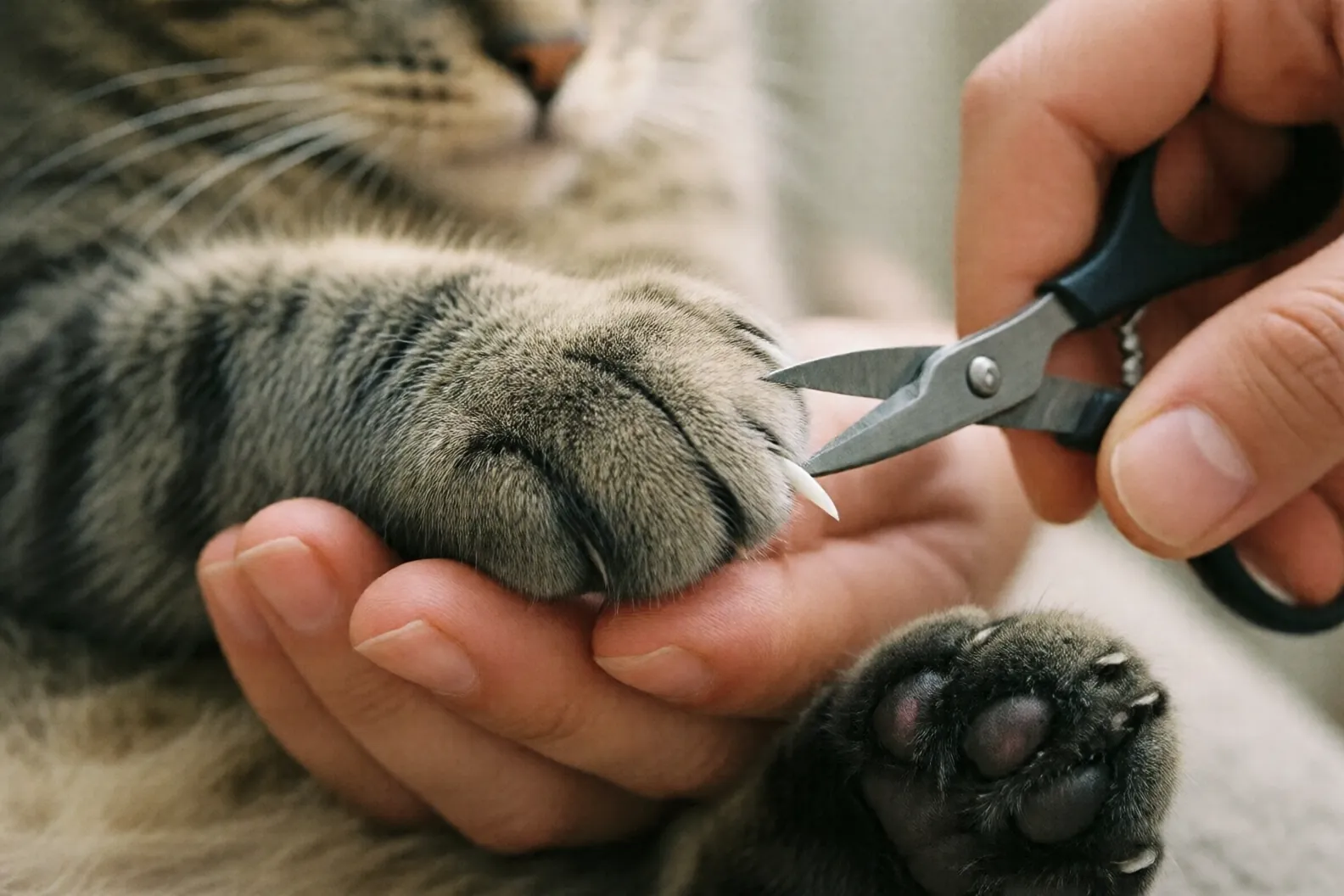
4. Extend the nail
Hold the paw gently and press lightly on the top of the toe and the pad underneath. The nail will extend.
5. Clip the tip
Clip just the sharp tip of the nail, cutting straight across and staying well away from the quick. One quick, confident clip is better than slow squeezing.
6. Reward
Give a treat after each nail, or each paw, especially at first.
7. Don't try to do it all at once
You don't have to trim every nail in one session. One paw, or even just two or three nails, is perfectly fine. Stop before your cat gets stressed and do more another day.
Don't forget the dewclaws: the "thumb" nails on the inside of the front legs. They don't touch the ground, so they don't wear down and can grow into the pad if ignored.
What if I cut the quick?
It happens, even to experienced owners. Don't panic:
- Press a pinch of styptic powder or cornstarch onto the nail tip.
- Apply gentle pressure for a minute or two until the bleeding stops.
- Give your cat a break and a treat, and finish another day.
If the bleeding doesn't stop after several minutes, contact your vet.
What if my cat fights it?
- Go slower. Go back to just handling paws with treats for a while.
- Do fewer nails per session. One nail a day still counts.
- Try a towel wrap for cats who wriggle.
- Ask for help. A second person can hold and distract with treats while you clip.
- Let a professional do it. Vets and groomers trim nails all the time and can show you how. There's no shame in leaving it to them.
Never force or punish your cat. A bad experience makes the next trim much harder.
Final thoughts
Nail trimming doesn't have to be a battle. Start slow, trim just the tips, use lots of treats, and keep sessions short. Within a few weeks, many cats barely notice it's happening.
Trimmed nails pair perfectly with a good scratching post. Here's how to stop your cat from scratching furniture. And for the rest of the grooming routine, see how to brush your cat.
Need the right clippers? Check out our health and grooming picks.