How to Brush Your Cat (Even If They Hate It)
As an Amazon Associate I earn from qualifying purchases. Learn more
Cats are great at grooming themselves, so why brush them at all? Because regular brushing helps more than you might think:
- Fewer hairballs, since your cat swallows less loose fur
- Less shedding on your sofa, clothes and bed
- Prevents mats, especially in long-haired cats
- Healthier skin and coat, by spreading natural oils
- An early warning system, because you'll notice lumps, scabs, fleas or skin problems sooner
- Bonding time, as many cats grow to really enjoy it
How often should you brush your cat?
- Short-haired cats: about once a week is usually enough. More often during shedding season.
- Long-haired cats: ideally every day, or at least several times a week, to prevent mats.
- Senior or overweight cats: may need extra help, because they can struggle to groom themselves properly, especially along the back and rear.
Choosing the right brush
- Slicker brush: fine wire bristles that remove loose fur and small tangles. Good for most coat types.
- Metal comb: great for long-haired cats to work through tangles and check for mats. Also handy for spotting fleas.
- Rubber grooming mitt or brush: gentle and great for short-haired cats or cats who are nervous about brushes.
- Deshedding tools: remove the undercoat. Useful during heavy shedding, but use gently and not too often, as overuse can irritate the skin.
If you're not sure, a rubber mitt for short-haired cats or a slicker brush plus a comb for long-haired cats is a great start.
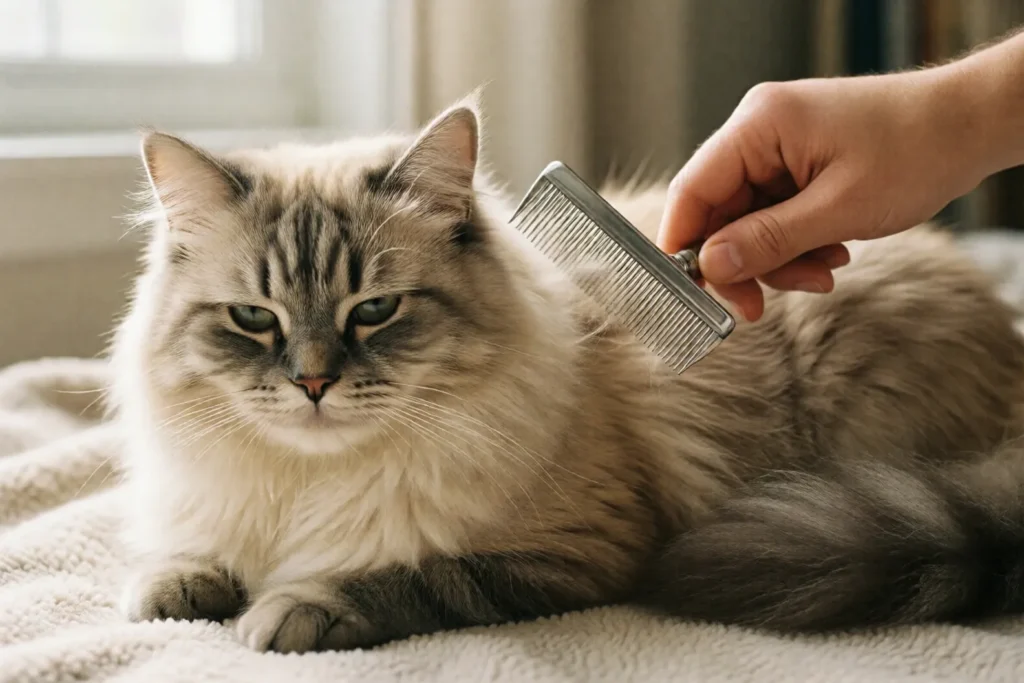
How to brush your cat, step by step
1. Pick a calm moment
Choose a time when your cat is relaxed, like after a meal or when they're already curled up near you. Not right after play, and not when they're in a grumpy mood.
2. Start with petting
Stroke your cat as usual, then introduce the brush slowly. Let them sniff it first.
3. Brush in the direction of the fur
Use gentle strokes along the back and sides first. These are the areas most cats enjoy. Brush with the direction of hair growth, not against it.
4. Work up to trickier areas
The belly, legs, tail and armpits are more sensitive, and mats often form here in long-haired cats. Go slowly and gently, and skip them if your cat isn't ready yet.
5. Keep it short
Especially in the beginning, a few minutes is plenty. Stop before your cat gets annoyed, so the experience ends on a good note.
6. Reward
Finish with a treat, some praise or a quick play session. You want your cat to associate the brush with good things.
What if my cat hates being brushed?
Plenty of cats aren't fans at first. Here's how to win them over:
- Go tiny. Start with just a few strokes per session, then stop and give a treat.
- Try a different tool. Some cats hate slicker brushes but love a soft rubber mitt.
- Brush where they like it first. Many cats enjoy being brushed on the cheeks and along the back.
- Use treats or a lickable treat to distract and reward during brushing.
- Never force it. Holding a struggling cat down makes things worse for next time.
Patience pays off. Many cats who hated brushing at first end up asking for it.
Dealing with mats
Mats are clumps of tangled fur, common in long-haired cats. They can pull on the skin and become painful.
- Small tangles: gently work them apart with your fingers or a comb, holding the fur near the skin so you don't pull.
- Large or tight mats: don't try to cut them out with scissors. Cat skin is thin and very easy to cut by accident, and it's one of the most common grooming injuries. Ask a professional groomer or your vet to remove them.
Things to check while brushing
Brushing is a great time to give your cat a quick once-over:
- Lumps or bumps
- Scabs, wounds or redness
- Fleas or flea dirt (tiny black specks)
- Bald patches or thinning fur
- Any area your cat suddenly doesn't want touched
If you notice anything unusual, mention it to your vet.
Final thoughts
A few minutes of brushing a week, or a day for long-haired cats, keeps your cat's coat healthy, cuts down on hairballs and shedding, and helps you spot health issues early. Start slow, keep it positive, and most cats will come to enjoy it.
While you're working on grooming, here's how to tackle the other job cats don't love: trimming your cat's nails.
Looking for the right brush? See our health and grooming picks.