How to Get Your Cat to Use an Automatic Litter Box
As an Amazon Associate I earn from qualifying purchases. Learn more
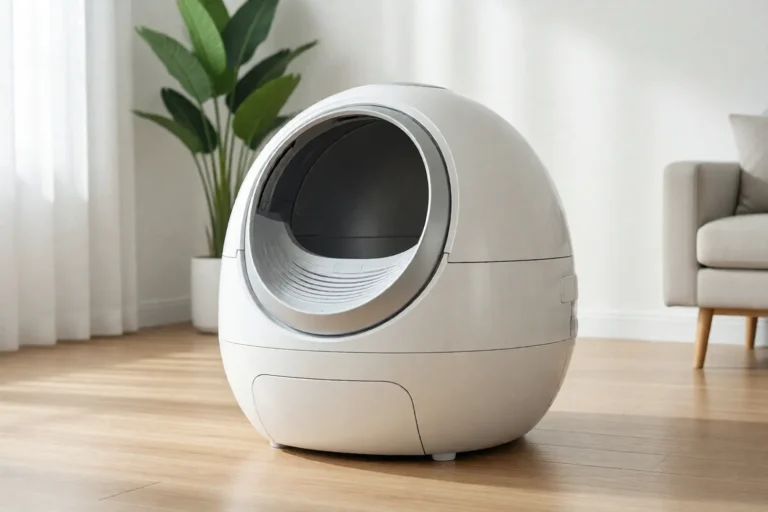
You've got your shiny new automatic litter box, set it up, and your cat walks past it like it's a spaceship that landed in the bathroom. Totally normal.
Cats don't love sudden changes, especially when it comes to their toilet. The trick is to go slowly and let your cat get used to it on their terms. Here's how.
Before you start
- Read the manual. Check the minimum cat weight, the recommended litter, and how to switch automatic cleaning off or to manual mode.
- Use litter your cat already knows, if the box allows it. Changing the box and the litter at the same time is two big changes at once.
- Don't remove the old litter box yet. This is the most important rule. Your cat needs a familiar option during the transition.
Step 1: Place it next to the old box
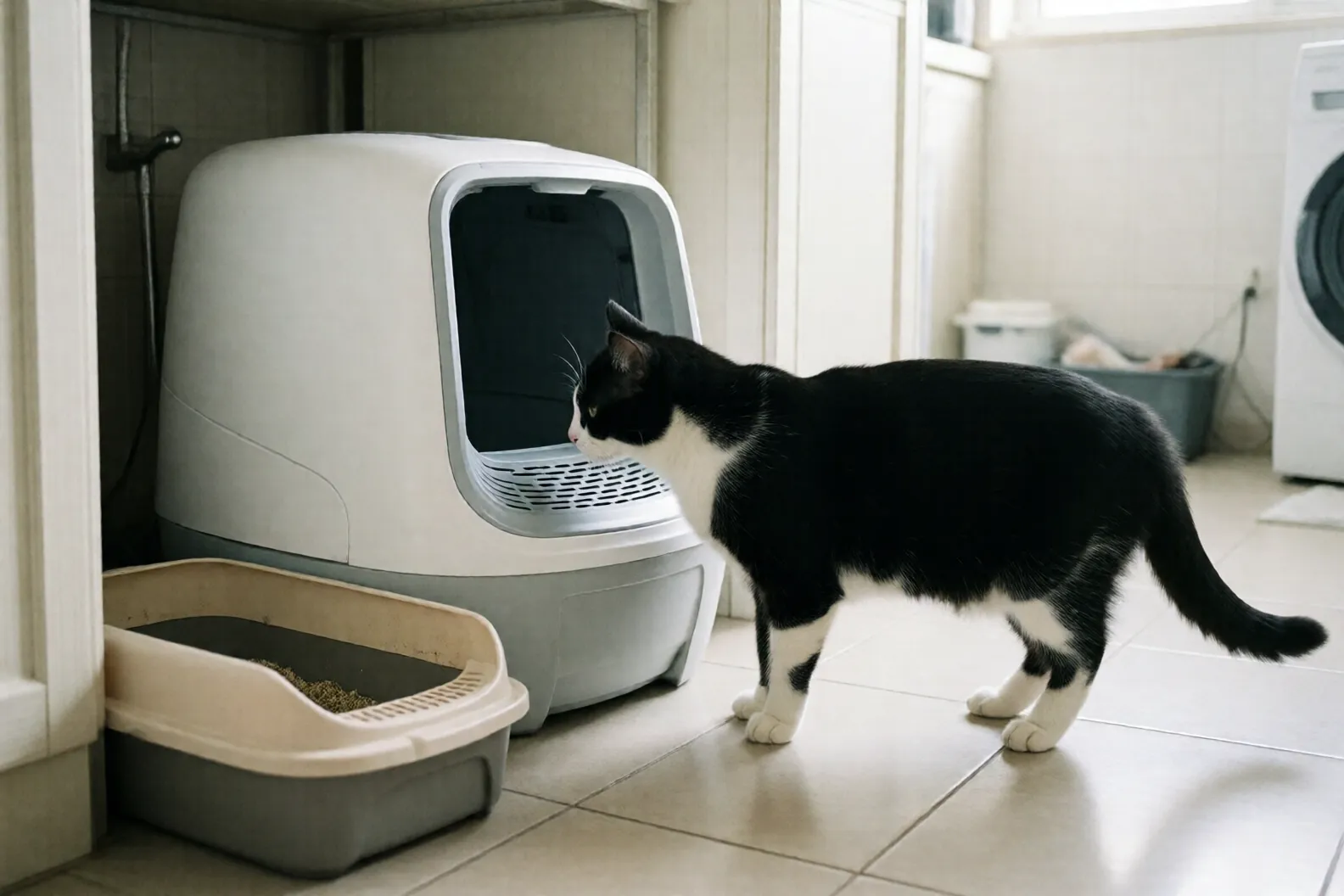
Set up the automatic box right next to your cat's current box, with the power off (or automatic cleaning disabled). At this stage, it's just a new, unfamiliar box. Let your cat sniff and explore it at their own pace.
Tip: sprinkle a little used litter from the old box into the new one. The familiar smell tells your cat "this is a toilet."
Step 2: Let them use it as a normal box
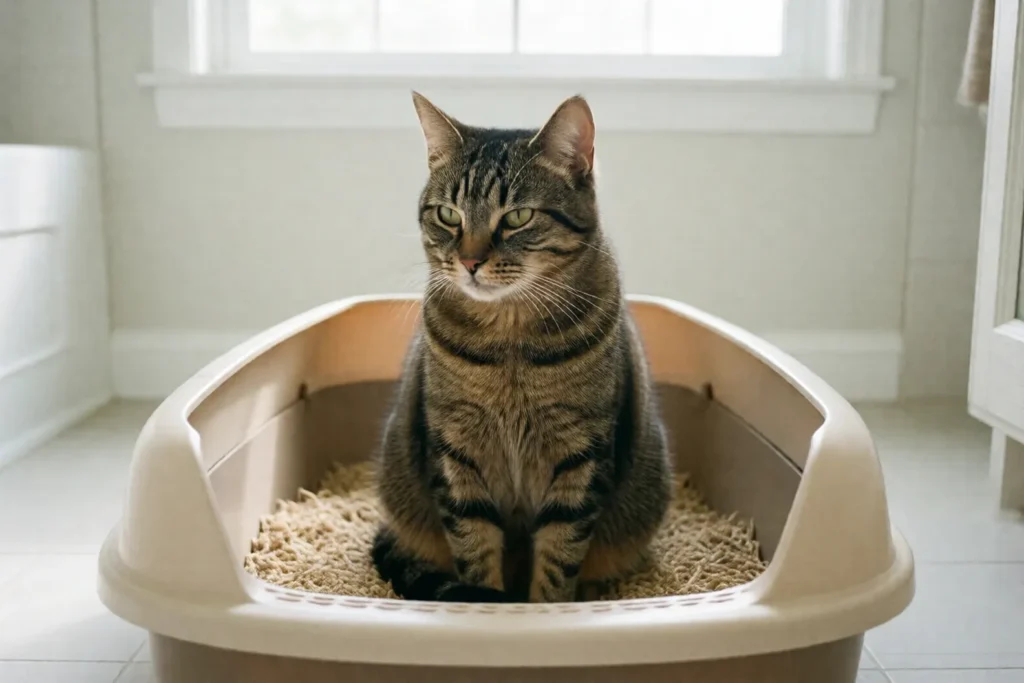
Keep the power off and scoop it by hand for a few days, just like a regular box. You want your cat to start using it as a normal litter box before any movement or noise is introduced.
Some cats switch over within a day. Others need a week or more. Don't rush this step.
Step 3: Introduce the cleaning cycle while you're nearby
Once your cat is using the new box regularly, turn on the cleaning cycle, ideally while your cat is in the room but not in the box, and while you're there. Let them see and hear it working from a safe distance.
If they seem startled, offer a treat and some calm attention. You want them to learn that the noise is boring, not scary.
Step 4: Switch to automatic mode
When your cat is relaxed around the cleaning cycle, switch to full automatic mode. If your box lets you set a longer delay after your cat leaves before cleaning starts, use a longer delay at first so your cat is well out of the way.
Step 5: Make the old box less appealing, slowly
Once your cat is consistently using the automatic box:
- Scoop the old box less often, so the automatic one becomes the "cleaner" choice.
- Then move the old box a bit further away over a few days.
- Finally, remove it, or keep it elsewhere in the house as one of your extra boxes (still recommended in multi-cat homes).
What if my cat is scared of it?
- Go back a step. Turn the automatic mode off again and let them use it as a normal box for longer.
- Check the location. A quiet, low-traffic spot helps a nervous cat feel safe.
- Use rewards. Treats near the box and calm praise can help.
- Be patient. Some cats need several weeks.
What if my cat refuses completely?
Some cats simply never accept an automatic box, and that's okay. Never force your cat into the box or take away all other options, because that's how cats start going outside the box altogether.
Important: if your cat stops using any litter box, strains, or goes more often than usual, see a vet first. Sudden litter box changes can be a sign of a urinary problem rather than just dislike of the new box.
Quick summary
- Read the manual and check the weight limit.
- Place it next to the old box, powered off.
- Add some used litter for familiar smell.
- Let your cat use it as a normal box first.
- Introduce the cleaning cycle while you're nearby.
- Switch to automatic mode.
- Phase out the old box slowly.
Final thoughts
The secret to a successful switch is patience. Take it slow, keep the old box around until your cat is confident, and most cats will come around.
Still deciding whether to get one at all? Read are automatic litter boxes worth it? first, or browse our automatic litter box picks.